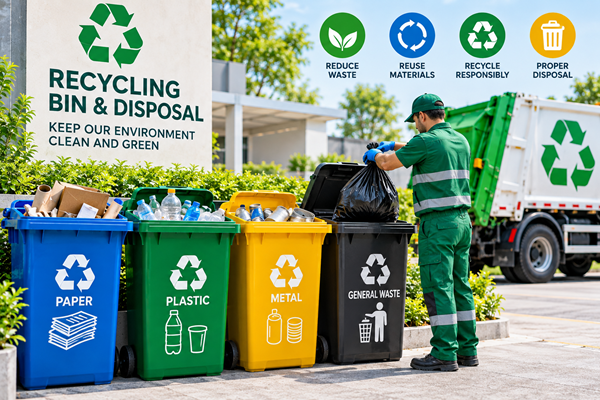
A successful recycling routine begins long before materials reach a collection facility. It starts with recognizing which items can be recovered and keeping them separate from general rubbish. Finding appropriate places to drop off recycling helps complete that process by connecting recyclable materials with suitable collection systems.
For households, businesses, and renovation projects, a clear recycling strategy can reduce clutter, improve organization, and support responsible resource management.
Build a Recycling System Before You Need One
Waiting until recyclable materials accumulate can make sorting more difficult.
Create Separate Collection Areas
Use clearly identified containers for paper, metal, and other locally accepted recyclables.
This makes sorting easier during everyday activities.
Keep Materials in Suitable Conditions
Store cardboard and paper in dry areas.
Keep materials away from chemicals, food waste, and other sources of contamination.
Review Local Recycling Guidelines
Acceptance rules differ between facilities.
Understanding these requirements helps prevent unsuitable items from entering recycling streams.
Recycling During Household Cleanups
Major household cleanups often reveal materials that require different disposal approaches.
Packaging and Cardboard
Moving boxes, shipping materials, and clean cardboard packaging may qualify for recycling.
Flatten boxes to reduce storage space.
Metal Household Items
Certain metal objects may be suitable for scrap recovery.
Check whether the receiving facility accepts the item in its current condition.
Electronics and Batteries
Electronic equipment and batteries may require specialized collection programs.
Do not assume they belong with ordinary household recyclables.
Recycling During Renovations
Renovation work creates additional opportunities for material separation.
Wood Materials
Clean, untreated wood may be suitable for reuse or specialized processing.
Treated or contaminated wood can have different disposal requirements.
Concrete and Masonry
Certain facilities process suitable concrete into recycled aggregate.
Drywall and Roofing Materials
Some locations accept specific drywall or roofing materials for recovery.
Material condition and facility capabilities determine eligibility.
Choosing Appropriate Recycling Locations
When comparing places to drop off recycling, evaluate their suitability for your materials.
Accepted Waste Categories
Check whether the facility handles household recyclables, construction debris, or specialized materials.
Accessibility
Consider operating hours, unloading arrangements, and vehicle access.
Preparation Requirements
Some locations require materials to be separated before arrival.
Following these instructions helps simplify processing.
You can explore local recycling collection and disposal locations when planning your next visit.
Common Sorting Problems
Contamination remains a significant challenge for recycling programs.
Food residue, liquids, and incompatible materials can reduce the quality of recyclable loads.
Another problem is placing items into recycling containers based solely on packaging symbols.
These symbols do not always indicate local acceptance.
When uncertain, verify the receiving facility’s requirements.
Encouraging Better Recycling Habits
Consistency makes recycling easier.
Households can establish regular sorting routines, while workplaces can use clear signage to help employees identify appropriate collection containers.
Construction teams may benefit from dedicated areas for wood, metal, and other recoverable materials.
These practices can reduce confusion and improve material handling.
Conclusion
Finding suitable places to drop off recycling is only one part of responsible waste management.
Effective recycling begins with material identification, proper storage, and consistent separation.
By developing practical sorting habits and choosing appropriate collection locations, households and businesses can reduce unnecessary disposal and support long-term resource conservation.
What do you feel about this post?

Like

Love

Happy

Haha

Sad