Contemporary architecture increasingly relies on materials that can support creative design while meeting practical construction requirements. Exterior surfaces must complement building geometry, withstand environmental exposure, and remain manageable during installation.
An aluminum composite panel offers a versatile approach to these challenges. Its layered structure and adaptable surface characteristics make it relevant to many architectural applications.
Understanding its design possibilities helps project teams create building exteriors that are both visually coherent and technically appropriate.
A Material Designed for Architectural Adaptability
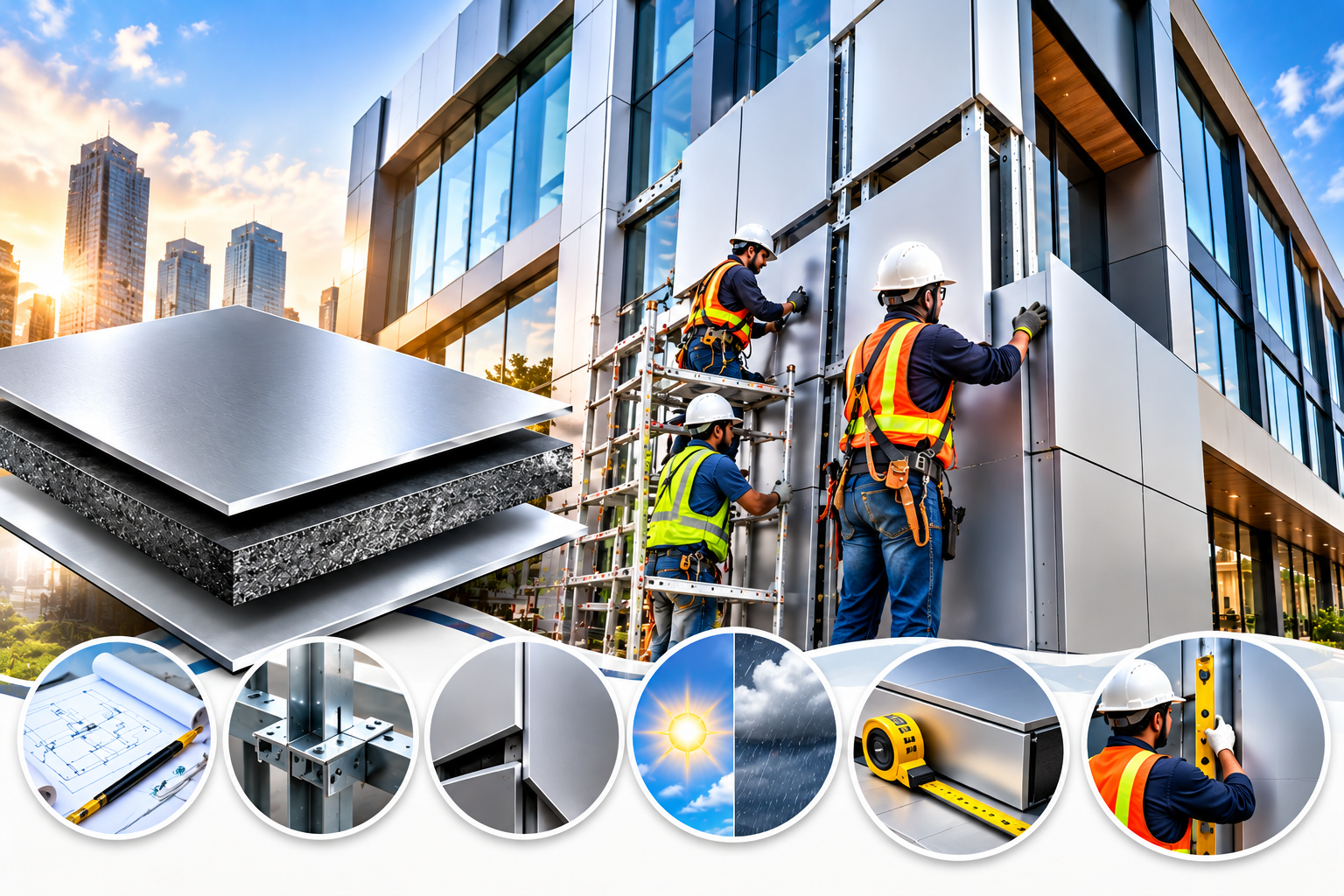
Composite panels typically consist of two aluminum sheets bonded to a central core.
This configuration produces a relatively lightweight panel with useful stiffness and a smooth exterior surface.
An aluminum composite panel can be incorporated into different facade arrangements, including broad flat elevations and selected fabricated architectural details.
Its suitability depends on the chosen specification and the demands of the building.
Supporting Clean Architectural Lines
Modern buildings often emphasize simplicity and geometric clarity.
Composite cladding can reinforce these characteristics through consistent panel dimensions and carefully coordinated joints.
Large surfaces may appear visually continuous when panel alignment and finish selection are handled thoughtfully.
Using Color to Define Building Identity
Color selection strongly influences architectural perception.
Neutral finishes can create a restrained appearance, while contrasting tones may emphasize entrances or distinguish different building sections.
An aluminum composite panel can be specified with various architectural finishes, subject to the available material options.
Combining Different Visual Textures
Architects sometimes combine smooth metal surfaces with glass, masonry, or other facade materials.
These combinations can create depth and contrast without overwhelming the building’s overall design.
Careful coordination of material transitions helps preserve visual balance.
Finish compatibility and exposure conditions should also be evaluated.
Creating Geometric Facade Features
Composite cladding is not limited to simple rectangular arrangements.
Certain panel specifications permit routing, folding, and fabrication into shaped components.
This flexibility can help designers create angular forms, recessed features, and distinctive facade patterns.
However, an aluminum composite panel must be fabricated within the limits established for its construction.
Designing With Practical Fabrication in Mind
Complex shapes require careful planning.
Panel geometry should account for bend limitations, edge details, attachment access, and dimensional tolerances.
Early coordination between designers and fabrication specialists can help reduce unnecessary adjustments during construction.
Balancing Appearance and Performance
Visual design must be supported by suitable engineering.
Wind loads, panel spans, thermal movement, and attachment capacity influence the final facade arrangement.
An aluminum composite panel should be selected with reference to verified technical information.
The supporting wall assembly must also provide the required moisture, thermal, and fire-safety performance.
Considering the Building Environment
A facade exposed to strong sunlight may experience significant temperature variation.
Coastal conditions can introduce additional corrosion-related concerns for some components.
Urban pollution may increase cleaning requirements.
These factors should influence finish selection, attachment materials, and maintenance planning.
Preserving Architectural Quality Over Time
Routine maintenance helps exterior surfaces retain their intended appearance.
Cleaning should use methods appropriate to the coating and environmental conditions.
Inspections should also identify visible damage, connection issues, or deteriorating joint components.
An aluminum composite panel incorporated into a well-designed system can provide durable architectural performance, although actual results depend on the complete assembly and surrounding environment.
Conclusion
Aluminum composite panel cladding gives architects opportunities to explore color, geometry, texture, and visual continuity. Its lightweight layered construction and fabrication flexibility make it suitable for numerous contemporary design approaches. Yet aesthetic freedom must remain connected to technical responsibility. Proper engineering, fire-safety compliance, moisture management, and installation planning are essential for dependable results. When these considerations are integrated from the beginning, composite panels can help create distinctive architectural exteriors that maintain their visual character and functional value over time.
What do you feel about this post?

Like

Love

Happy

Haha

Sad