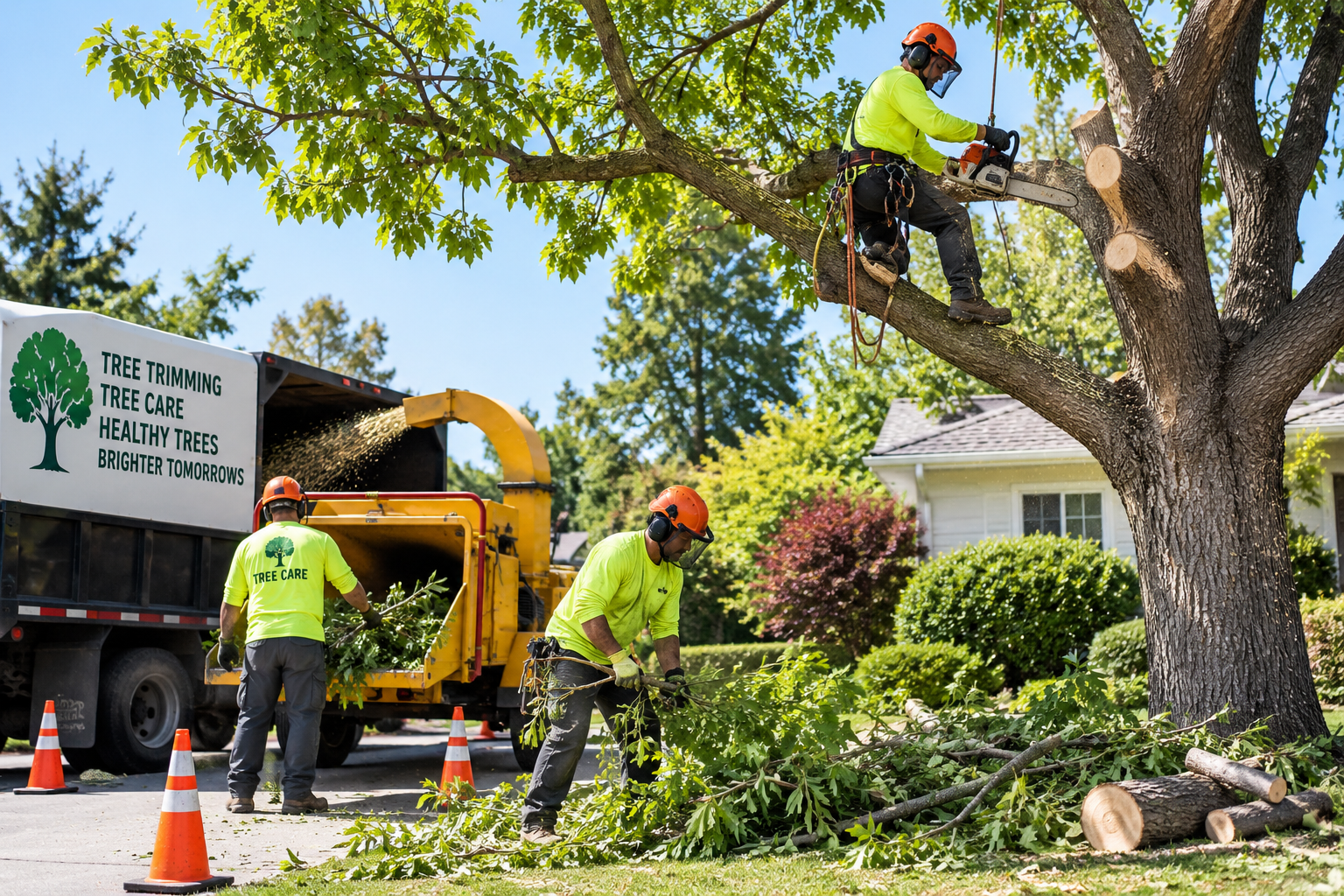
Healthy trees contribute shade, natural beauty, and character to residential landscapes. However, branches can become overgrown, damaged, or poorly positioned as trees mature. Regular pruning helps manage these concerns while supporting long-term tree health. Before arranging the work, homeowners often want to understand tree trimming cost and the factors that determine the scope of a pruning project.
Why Tree Trimming Costs Vary
Tree trimming is not a uniform task. Different species, growth patterns, and property conditions require different approaches.
A small ornamental tree may need only minor corrective pruning, while a mature shade tree may require extensive assessment and carefully planned branch removal.
Tree trimming cost reflects these differences.
Tree Height and Canopy Density
Larger trees generally require more time and equipment to access their branches.
A broad canopy with numerous overlapping limbs can also increase the complexity of pruning.
Dense growth may limit visibility and require workers to move carefully through the canopy.
As a result, tree trimming cost often depends on both height and overall branch structure.
Branch Condition
Healthy branches are generally more predictable to handle than dead, cracked, or partially detached limbs.
Damaged branches may require additional precautions, especially when they hang above structures or frequently used areas.
The presence of hazardous limbs can therefore influence the work involved.
Different Pruning Objectives
The purpose of trimming plays an important role in determining the project requirements.
Crown Cleaning
Crown cleaning focuses on removing selected dead, damaged, or diseased branches.
This process can reduce certain hazards and improve the tree’s overall condition without unnecessarily altering its natural shape.
Crown Thinning
Selective thinning removes appropriate branches to improve canopy structure and light penetration.
However, excessive thinning can weaken a tree and encourage undesirable growth.
Proper pruning should preserve a healthy canopy rather than remove large amounts of foliage indiscriminately.
Clearance Pruning
Branches sometimes grow too close to buildings, walkways, or other structures.
Clearance pruning creates appropriate separation while considering the tree’s long-term growth.
Tree trimming cost may vary when branches require precise cutting to protect surrounding property.
How Seasonal Timing Influences Planning
Pruning requirements differ between tree species.
Many deciduous trees tolerate structural pruning well during dormancy, while other species benefit from different schedules.
Removing dead or hazardous branches may be appropriate at various times of year.
However, heavy pruning during periods of environmental stress can negatively affect tree health.
Understanding seasonal growth patterns helps homeowners avoid unnecessary cutting.
The Importance of Proper Pruning Techniques
Incorrect pruning can create long-term problems.
Large, poorly positioned cuts may expose trees to decay or encourage weakly attached regrowth.
Similarly, removing too much foliage reduces the tree’s ability to produce energy through photosynthesis.
Good pruning preserves the branch collar, maintains appropriate structure, and avoids unnecessary damage.
These technical considerations are important when evaluating tree trimming cost.
For homeowners researching tree trimming cost, understanding proper pruning practices is just as valuable as comparing estimates.
Additional local tree pruning guidance may help property owners assess common landscape concerns.
Questions to Ask Before Scheduling Pruning
Homeowners should understand exactly which branches will be addressed and why.
A useful assessment explains whether the work focuses on safety, clearance, structural improvement, or removal of damaged wood.
It is also important to clarify cleanup arrangements and how surrounding landscaping will be protected.
Avoid selecting pruning methods solely because they remove the greatest amount of growth. More cutting does not necessarily produce a healthier tree.
Can Routine Maintenance Reduce Future Work?
Regular inspections can identify minor structural concerns before they become more complicated.
Young trees may benefit from early structural pruning that encourages strong branch attachments.
Mature trees should be monitored for deadwood, storm damage, and changing clearance requirements.
Although maintenance cannot prevent every future problem, timely attention can reduce some avoidable complications.
Conclusion
Understanding tree trimming cost requires looking beyond the size of a tree. Canopy structure, branch condition, accessibility, pruning objectives, and safety requirements all influence the work.
Homeowners who prioritize proper techniques and informed planning can protect their landscapes while encouraging healthier growth. Thoughtful pruning preserves the natural beauty of trees and supports safer outdoor spaces for years to come.
What do you feel about this post?

Like

Love

Happy

Haha

Sad