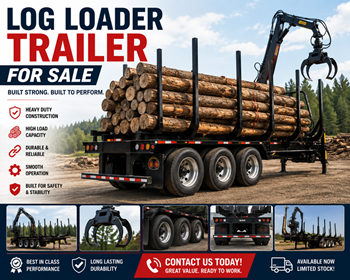
Woodland transportation conditions change significantly throughout the year. Spring moisture, summer vegetation, autumn rainfall, and winter freezing can each affect access routes and equipment performance. A logging trailer can support timber movement across these seasonal changes when operators adapt their working methods to the conditions rather than relying on a single transportation routine.
Understanding Seasonal Transportation Challenges
Forest tracks respond differently to changing weather.
A route that supports equipment during dry summer conditions may become difficult to navigate after prolonged rainfall.
Similarly, frozen ground can provide temporary firmness while concealing slippery or uneven surfaces.
Successful timber transportation requires regular assessment of ground conditions.
Spring: Managing Soft Ground
Spring thaw can weaken woodland access routes.
Moisture accumulation may reduce traction and increase the likelihood of rutting.
Before moving loaded equipment, inspect vulnerable sections and determine whether the route can safely support the intended load.
Delaying movement during unsuitable conditions may prevent unnecessary ground damage.
Summer: Maintaining Access and Visibility
Summer often brings increased vegetation growth.
Overhanging branches and dense undergrowth can restrict visibility along woodland paths.
Dry conditions may improve access in some areas, although loose surfaces can still affect traction.
Inspect Routes Regularly
Check for fallen branches, exposed roots, and changes in ground condition.
Maintain adequate clearance without unnecessarily disturbing surrounding vegetation.
A logging trailer should operate only where the route provides suitable space for safe movement and turning.
Autumn: Preparing for Changing Conditions
Autumn rainfall can quickly alter access routes.
Wet leaves, mud, and reduced daylight may complicate transportation.
Operators should plan activities around available visibility and expected ground conditions.
Organize Timber Collection Areas
Position collection points where equipment can approach safely.
Avoid creating piles in drainage channels or locations prone to flooding.
Arrange logs to minimize repeated handling during loading.
Winter: Addressing Cold-Weather Risks
Cold conditions introduce additional challenges.
Snow may conceal obstacles, while ice can reduce traction.
Low temperatures may also influence the behavior of hydraulic systems and other mechanical components.
Follow Cold-Weather Operating Guidance
Use appropriate fluids and maintenance procedures recommended by the manufacturer.
Inspect tires, connections, and moving assemblies before beginning work.
Allow machinery to reach suitable operating conditions where required.
Never assume frozen ground is stable without checking the underlying conditions.
Maintain Safe Loading Practices Year-Round
Regardless of season, timber must be loaded and restrained correctly.
Distribute weight according to equipment specifications.
Keep logs within designated supports and use suitable securing arrangements.
Check Loads Before Transportation
Inspect restraints and confirm that material cannot shift unexpectedly.
Ensure the towing equipment is compatible with the loaded trailer.
Avoid sudden movements that could compromise stability on uneven terrain.
Create a Seasonal Maintenance Schedule
Regular maintenance helps equipment remain dependable as operating conditions change.
Inspect wheel assemblies, structural connections, load supports, and braking components where fitted.
Clean accumulated debris and follow recommended lubrication intervals.
Prepare for Extended Storage
When equipment will remain unused, clean and inspect it before storage.
Protect exposed components according to manufacturer guidance.
Check its condition again before returning it to service.
Operators seeking further regional context can explore a local timber transportation equipment resource while reviewing woodland equipment requirements.
Conclusion
A logging trailer can support reliable timber transportation throughout the year when operators account for changing weather, ground conditions, and maintenance requirements. Seasonal route inspections, secure loading, and appropriate equipment care help maintain safe operation. By adapting transportation practices to woodland conditions, operators can reduce unnecessary interruptions and create a more dependable approach to moving timber.
What do you feel about this post?

Like

Love

Happy

Haha

Sad