A raccoon inside a residential building can create problems that extend beyond nighttime noise. Damaged insulation, contaminated spaces, and weakened exterior materials may all require attention.
Although homeowners often focus on getting the animal out, successful wildlife management involves several connected stages.
A carefully planned raccoon removal service should consider animal behaviour, property conditions, humane exclusion, and long-term prevention.
Stage One: Identify the Wildlife Activity
The process begins with determining whether raccoons are actually present.
Scratching, heavy movement, and nighttime disturbances can indicate attic activity, but other animals may produce similar sounds.
A careful inspection looks for supporting evidence.
Examine the Exterior
Roof vents, soffits, chimney openings, and damaged siding are common areas to examine.
Raccoons may enlarge existing weaknesses, creating access to protected spaces.
Inspectors should also look for evidence of repeated movement around suspected entrances.
Evaluate Interior Conditions
Accessible attic areas may reveal displaced insulation, nesting materials, droppings, or other signs of occupancy.
However, confined spaces should not be entered casually when wildlife is suspected.
An animal may react defensively if surprised or cornered.
Stage Two: Determine Whether Young Are Present
This is one of the most important parts of the process.
Female raccoons may establish dens inside attics while caring for dependent babies.
If the mother is excluded before the young are accounted for, the babies may remain trapped inside.
A responsible raccoon removal service must consider this possibility before selecting an exclusion method.
Timing, nesting conditions, and animal welfare all influence the safest approach.
Stage Three: Choose an Appropriate Exclusion Method
Humane exclusion aims to allow wildlife to leave a structure without unnecessary harm.
Depending on the situation, a carefully positioned one-way exit may be appropriate after confirming that no dependent young will be stranded.
Not every situation is suitable for the same technique.
Why Improvised Methods Can Fail
Attempting to scare raccoons away with chemicals, smoke, or aggressive disturbance can create safety concerns.
These actions may cause animals to retreat deeper into a building rather than leave.
Blocking entrances too early can also trap wildlife inside walls or attic spaces.
Careful planning helps avoid these outcomes.
Stage Four: Confirm the Building Is Vacant
Before final closure, it is essential to establish that the animals have safely departed.
This may involve monitoring activity and checking the affected spaces.
Once occupancy has ended, the original entrance and other vulnerable openings can be addressed.
Durable repairs help prevent future access.
Stage Five: Assess Damage and Sanitation
Raccoons can disturb insulation and leave droppings in sheltered areas.
Contamination deserves particular attention because raccoon faeces may contain organisms harmful to humans.
Dry sweeping or vacuuming suspected contaminated droppings with ordinary household equipment can increase exposure risks.
Appropriate protective procedures should guide any cleanup.
Damaged materials may also need evaluation before repairs are completed.
Stage Six: Build a Prevention Routine
Even after successful exclusion, homeowners should maintain the exterior of their property.
Inspect roofing materials, secure garbage, remove fallen fruit, and avoid leaving pet food outside overnight.
Seasonal maintenance helps identify weak points before wildlife exploits them.
Residents seeking humane raccoon exclusion assistance should look for a complete approach rather than focusing solely on the animal’s immediate departure.
Conclusion
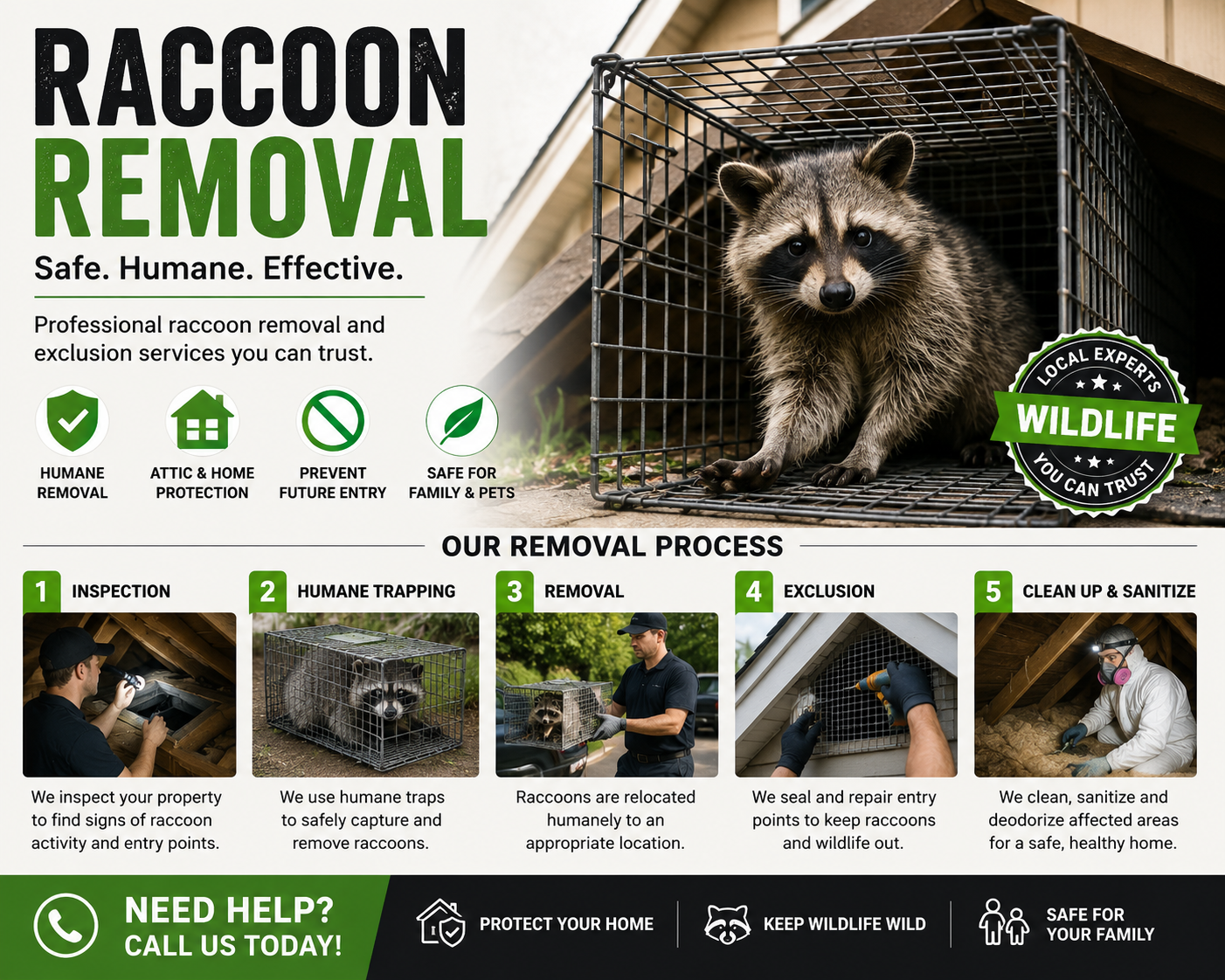
An effective raccoon removal service follows a logical sequence: inspection, nesting assessment, humane exclusion, vacancy confirmation, and prevention.
Skipping any of these stages can increase the likelihood of repeated wildlife activity or unresolved damage.
By understanding the complete process, homeowners can make safer decisions and maintain a more secure living environment.
What do you feel about this post?

Like

Love

Happy

Haha

Sad