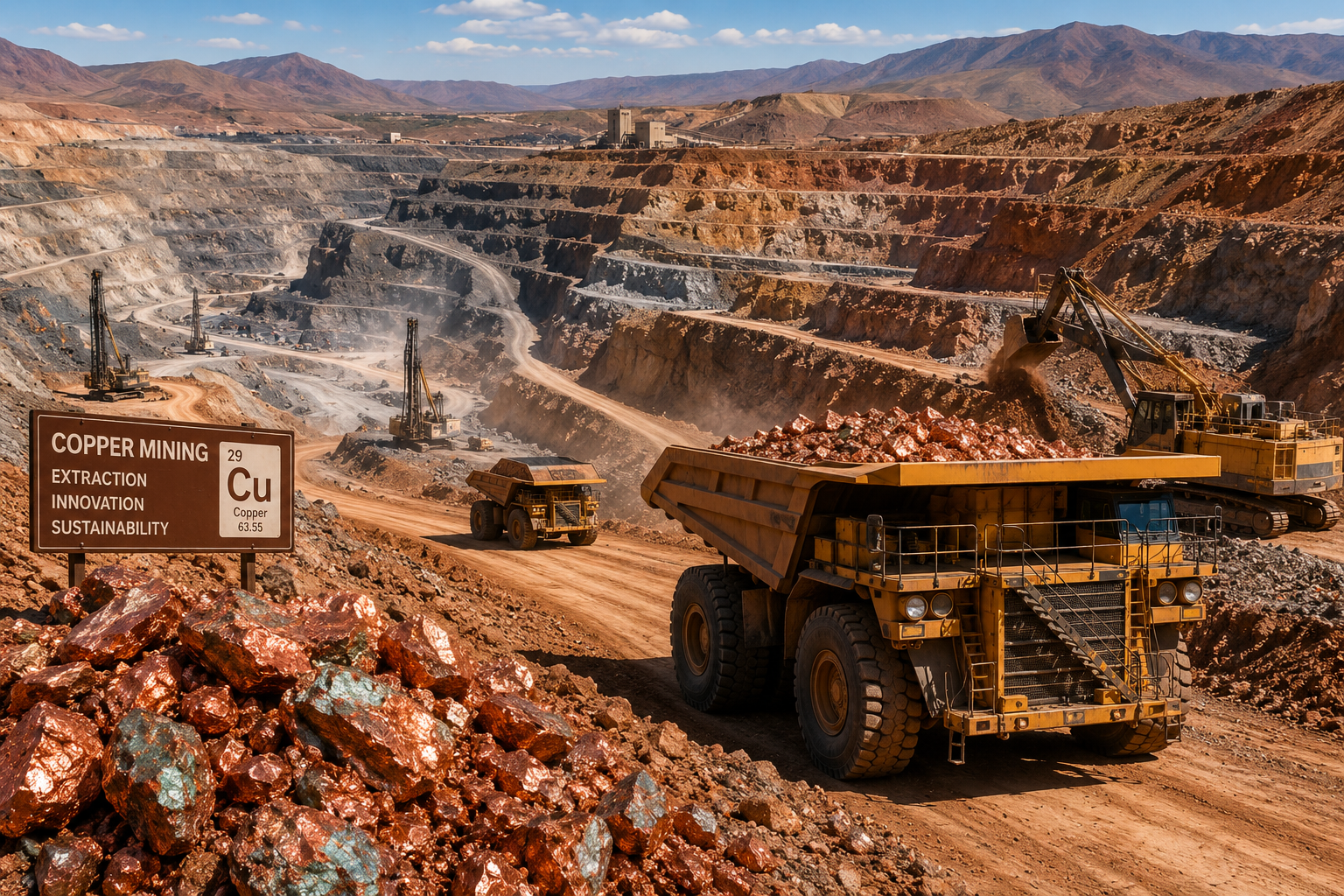
Mineral development can influence a region in ways that extend beyond the extraction site. It may create demand for specialized knowledge, technical education, transportation planning, and supporting infrastructure. Mining in Michigan provides an important context for understanding how natural resources and workforce development can intersect, particularly in communities with a long industrial heritage.
Mining as a Source of Technical Work
Mining operations require people with different professional backgrounds.
Geologists investigate mineral deposits, engineers design operational systems, and environmental specialists assess potential impacts.
Equipment technicians, safety professionals, and other skilled workers also contribute to daily activities.
The Role of Geological Expertise
Geologists interpret rock formations and mineral distribution.
Their work supports exploration planning and helps engineering teams understand underground conditions.
Accurate geological information can improve operational decisions and identify areas requiring additional investigation.
Engineering and Infrastructure Skills
Mining in Michigan may involve engineering challenges associated with underground conditions, water management, and seasonal weather.
Civil, mechanical, electrical, and mining engineers can contribute expertise to different stages of development.
Their responsibilities depend on the proposed operation and its technical requirements.
Underground Engineering
Underground operations require attention to ground support, ventilation, equipment movement, and emergency access.
Engineering teams assess how these systems interact.
Appropriate design and inspection help maintain safe operating conditions.
Technical Education and Training
Workforce preparation is an important consideration for communities evaluating mineral development.
Training programs can help individuals develop skills in equipment operation, maintenance, environmental monitoring, and workplace safety.
Some abilities may also transfer to other industrial sectors.
Apprenticeships and Practical Experience
Practical training allows workers to apply technical knowledge in supervised environments.
Experienced personnel can help newer workers understand equipment behavior, site procedures, and hazard recognition.
Ongoing education is necessary as operational technologies change.
Potential Effects on Local Infrastructure
Mining activities may influence transportation requirements, utility planning, and demand for certain supporting facilities.
The scale of these effects depends on project size, location, workforce arrangements, and existing infrastructure.
Communities benefit from understanding both potential opportunities and possible pressures.
Transportation Considerations
Moving equipment and materials requires suitable transportation arrangements.
Planning may involve road conditions, traffic patterns, seasonal limitations, and safety requirements.
Early coordination can help identify infrastructure needs before operations begin.
Community Perspectives and Development
The relationship between mining and communities is not limited to employment.
Residents may have concerns about environmental protection, housing availability, traffic, and changes to local character.
These considerations deserve attention alongside economic expectations.
The Importance of Local Participation
Public engagement provides opportunities for communities to express priorities and ask questions.
Clear communication can improve understanding of proposed activities and their possible effects.
Meaningful participation requires listening as well as sharing technical information.
Building Long-Term Workforce Capabilities
Mining-related education can contribute to a broader foundation of technical knowledge.
Skills in mechanical systems, electrical maintenance, environmental science, and data interpretation may remain useful beyond a particular operation.
However, long-term benefits depend on access to training and actual employment opportunities.
Preparing for Changing Technologies
Modern industrial workplaces increasingly use digital monitoring and automated equipment.
Workers may need additional skills to interpret data, maintain electronic systems, and operate unfamiliar machinery.
Continuing education supports professional adaptability.
Balancing Opportunity and Responsibility
Mining in Michigan presents questions about how mineral development may fit within regional priorities.
Potential employment and infrastructure benefits must be considered alongside environmental obligations and community needs.
No single outcome can be assumed for every proposed operation.
Conclusion
Mining in Michigan connects geological resources with workforce skills, engineering knowledge, and community development. Its potential influence extends into education, infrastructure planning, and technical employment.
Careful evaluation helps communities understand possible benefits, recognize challenges, and participate in decisions that may shape their regional future.
What do you feel about this post?

Like

Love

Happy

Haha

Sad